

The UberEats Delivery Experience
28th May, 2025 | Spotlight | 4 min read
We all love the convenience of ordering food through apps like Uber, but sometimes what seems like a smooth, simple process is actually designed to sneak in extra costs. These tactics, known as "dark patterns," manipulate users into spending more than they intended. Let’s break down how Uber cleverly uses dark patterns to maximize its profits.
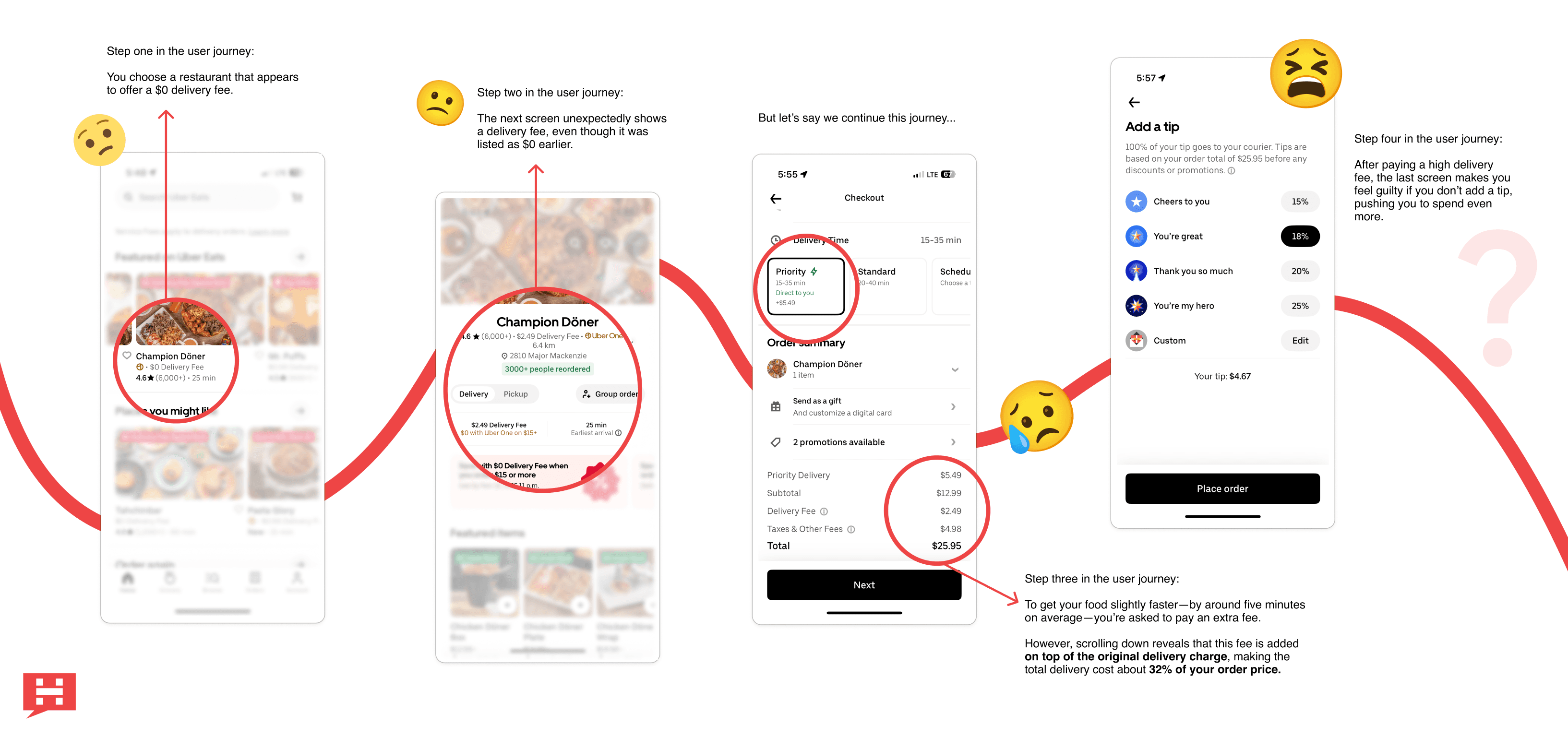
Step 1: The Alluring $0 Delivery Fee
You start off thinking you’ve just come up on a pretty sweet deal- a restaurant with a $0 delivery fee? You didn't want to cook today, so this sounds perfect! It’s a common tactic to lure users in with promises of “free” perks. You’re feeling good about your choice—until you move on to the next step.
Step 2: The Sneaky Delivery Charge
When you get to the next screen, you suddenly notice a delivery fee has appeared, even though it was advertised as $0 earlier. It’s not a huge fee, but it’s frustrating, especially because you were misled. This is classic dark pattern behavior: Uber gets your hopes up with a free delivery promise, only to vanish as you progress, leaving you wondering where that extra charge came from.
Step 3: The Temptation of Faster Delivery (For a Price)
Now, Uber throws in the option to get your food faster—by about five minutes, called "Priority Delivery". You scroll down, and here’s the kicker: this “faster delivery” fee is added on top of the original delivery charge. By the time it’s all said and done, your total delivery fee is a staggering 32% of your order price. Uber cleverly hides this fee in the details, making it easy to miss, but by the end of the journey, you’re paying more than you initially thought.
Step 4: The Guilt-Trip for Tipping
Finally, you reach the end of your order and see a prompt asking you to leave a tip. But it’s not just a casual suggestion. The design subtly pressures you into tipping, using language and cues that make you feel guilty if you don’t. It’s the classic "prosocial effect"—the idea that you’ll feel better if you help out, but in this case, it’s being used to nudge you into spending even more money. The associated guilt makes it difficult to say no.
UX Solutions to address these Dark Patterns
Transparent Pricing from the Start – Clearly display all fees upfront, including delivery and service charges, to prevent unexpected costs. Consistent Fee Display – Ensure that the delivery fee shown on the restaurant selection screen matches the final checkout total. Optional Tipping – Present tipping as a neutral choice without guilt-inducing language or design. User-Centric Design – Prioritize trust and transparency to improve long-term customer satisfaction and loyalty.
Conclusion: The Power of Dark Patterns
Uber’s delivery process is a perfect example of how dark patterns can be used to manipulate users into spending more than they planned. From hidden fees to emotional nudges, the whole experience is designed to get you to pay more, often without realizing how much you’re really spending until the very end.
It’s not just about one bad experience; these tactics can erode trust over time. Ethical design should be about making the process easy, transparent, and empowering for users, not tricking them into extra charges. A transparent experience for users is always the best route to success.